

Hey there! As a supplier of 4 - Bromobenzoic Acid, I often get asked about its acidity. So, let's dive right into it and break down what the acidity of 4 - Bromobenzoic Acid really means.
First off, what's 4 - Bromobenzoic Acid? It's a chemical compound with the formula C₇H₅BrO₂. The structure consists of a benzene ring with a bromine atom at the 4 - position and a carboxylic acid group (-COOH) attached to the ring. The carboxylic acid group is what gives 4 - Bromobenzoic Acid its acidic properties.
When we talk about acidity in chemistry, we usually refer to the ability of a compound to donate a proton (H⁺). In the case of 4 - Bromobenzoic Acid, the hydrogen atom in the -COOH group can be released as a proton, making it an acid. The acidity of an acid is measured by its acid dissociation constant, Ka, or its pKa value. The pKa is the negative logarithm of the Ka, and a lower pKa value indicates a stronger acid.
The pKa of 4 - Bromobenzoic Acid is around 3.97. To put this in perspective, let's compare it with some other well - known acids. Benzoic acid, which is the parent compound of 4 - Bromobenzoic Acid, has a pKa of about 4.20. The presence of the bromine atom in 4 - Bromobenzoic Acid makes it a stronger acid than benzoic acid. Why is that?
The bromine atom is an electron - withdrawing group. It pulls electron density away from the benzene ring through a combination of inductive and resonance effects. When the electron density is pulled away from the carboxylic acid group, the O - H bond in the -COOH group becomes weaker. As a result, it's easier for the hydrogen atom to dissociate as a proton, increasing the acidity of the compound.
Now, let's talk about how this acidity affects its applications. 4 - Bromobenzoic Acid is widely used in the pharmaceutical and chemical industries. In the pharmaceutical field, its acidity can play a crucial role in drug synthesis. For example, it can be used as an intermediate in the synthesis of various drugs. The acidic group can react with other functional groups in a molecule, allowing for the formation of new chemical bonds and the creation of more complex structures.
In the chemical industry, 4 - Bromobenzoic Acid can be used in the production of other organic compounds. Its acidity can be harnessed in acid - catalyzed reactions. For instance, it can act as a catalyst or a reactant in esterification reactions. When reacting with an alcohol, the carboxylic acid group in 4 - Bromobenzoic Acid can form an ester, which is a common functional group in many organic compounds.
If you're in the market for related compounds, we also supply Methyl 2 - Bromobenzoate, Ethyl 4 - bromophenylacetate, and p - Bromobenzaldehyde. These compounds also have their own unique chemical properties and applications.
Methyl 2 - Bromobenzoate is an ester that can be used in the synthesis of various pharmaceuticals and fragrances. Its structure and reactivity are different from 4 - Bromobenzoic Acid, but they are related in the sense that they both contain a benzene ring and a bromine atom.
Ethyl 4 - bromophenylacetate is another important intermediate in the chemical industry. It can be used in the synthesis of pesticides and other agrochemicals. The presence of the bromine atom and the ester group gives it specific reactivity patterns that are useful in these applications.
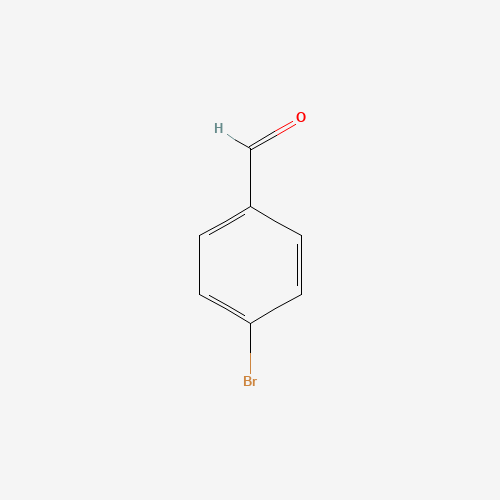
p - Bromobenzaldehyde is an aldehyde that has applications in the synthesis of dyes and pigments. Its reactivity is different from the acid and esters we've discussed so far, but it's still part of the same family of bromine - containing aromatic compounds.

So, if you're looking for high - quality 4 - Bromobenzoic Acid or any of these related compounds, you've come to the right place. We're committed to providing the best products and services to our customers. Whether you're a small - scale research laboratory or a large - scale industrial manufacturer, we can meet your needs.
If you're interested in purchasing 4 - Bromobenzoic Acid or any of our other products, feel free to reach out and start a conversation. We're here to answer any questions you might have and to work with you to find the best solutions for your projects.
In conclusion, the acidity of 4 - Bromobenzoic Acid is an important characteristic that determines its reactivity and applications. The electron - withdrawing effect of the bromine atom makes it a stronger acid than its parent compound, benzoic acid. This property allows it to be used in a wide range of chemical and pharmaceutical processes. And if you're in the market for this acid or related compounds, we're your go - to supplier.
References
- "Organic Chemistry" by Paula Yurkanis Bruice
- Journal articles on the synthesis and applications of bromine - containing aromatic compounds