

Hey there! As a supplier of 4-Bromobenzoic Acid, I'm super excited to chat with you about the various coupling reactions this awesome compound can take part in. 4-Bromobenzoic Acid, with its unique structure and properties, is a real star in the world of organic chemistry. Let's dive right in and explore the different coupling reactions it can be involved in.
Suzuki-Miyaura Coupling
One of the most well - known coupling reactions that 4 - Bromobenzoic Acid can participate in is the Suzuki - Miyaura coupling. This reaction is a palladium - catalyzed cross - coupling between an organoboron compound and an organohalide or pseudo - halide. In the case of 4 - Bromobenzoic Acid, it acts as the organohalide.
The beauty of the Suzuki - Miyaura coupling lies in its mild reaction conditions and high functional group tolerance. You can use different boronic acids or esters to couple with 4 - Bromobenzoic Acid. For example, if you couple it with an arylboronic acid, you can get biaryl compounds with a carboxylic acid group. This is extremely useful in the synthesis of pharmaceuticals, agrochemicals, and materials science.
The general reaction mechanism involves oxidative addition of the 4 - Bromobenzoic Acid to the palladium(0) catalyst, followed by transmetallation with the boronic acid or ester, and finally reductive elimination to form the new carbon - carbon bond. The carboxylic acid group in 4 - Bromobenzoic Acid remains intact during the reaction, which allows for further modifications after the coupling step.
Heck Reaction
The Heck reaction is another important coupling reaction for 4 - Bromobenzoic Acid. It is a palladium - catalyzed reaction between an unsaturated halide (in this case, 4 - Bromobenzoic Acid) and an alkene. This reaction can introduce a vinyl or aryl group to the aromatic ring of 4 - Bromobenzoic Acid.
The reaction conditions usually require a base and a palladium catalyst. The choice of alkene can vary widely, from simple alkenes to more complex ones with functional groups. The Heck reaction is regioselective, and the new carbon - carbon bond is formed at the less - substituted end of the alkene in most cases.
This reaction is great for building up complex organic molecules. For instance, if you couple 4 - Bromobenzoic Acid with a styrene derivative, you can get a compound with a stilbene - like structure, which has potential applications in the field of organic electronics.
Sonogashira Coupling
The Sonogashira coupling is a powerful method for introducing an alkyne group to 4 - Bromobenzoic Acid. It is a palladium - and copper - co - catalyzed reaction between an aryl halide (4 - Bromobenzoic Acid) and a terminal alkyne.
The reaction mechanism involves oxidative addition of the 4 - Bromobenzoic Acid to the palladium(0) catalyst, followed by transmetallation with the copper acetylide, and finally reductive elimination to form the carbon - carbon triple bond. The presence of the carboxylic acid group in 4 - Bromobenzoic Acid doesn't interfere much with the reaction, and it can be further derivatized after the coupling.
Alkyne - containing compounds obtained from the Sonogashira coupling of 4 - Bromobenzoic Acid are useful in many areas. They can be used in click chemistry, for example, to form triazole - containing compounds through the copper - catalyzed azide - alkyne cycloaddition reaction.
Negishi Coupling
The Negishi coupling is a palladium - or nickel - catalyzed cross - coupling reaction between an organozinc compound and an organohalide. 4 - Bromobenzoic Acid can serve as the organohalide in this reaction.
Organozinc compounds are relatively stable and can be prepared from various starting materials. The Negishi coupling has good functional group compatibility, and it can be used to couple 4 - Bromobenzoic Acid with different alkyl, aryl, or vinyl zinc reagents.
The reaction mechanism is similar to other palladium - catalyzed coupling reactions, involving oxidative addition, transmetallation, and reductive elimination steps. This reaction can be used to synthesize a wide range of compounds with different carbon skeletons, which are valuable in the synthesis of natural products and bioactive molecules.
Applications in the Synthesis of Related Compounds
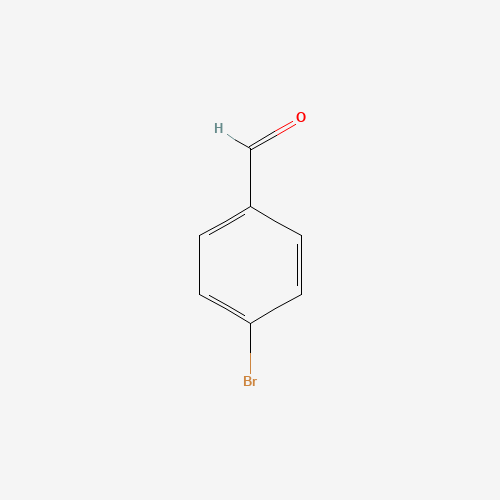
The coupling reactions of 4 - Bromobenzoic Acid open up a lot of possibilities for the synthesis of related compounds. For example, through coupling reactions, you can synthesize p-Bromobenzaldehyde. By first coupling 4 - Bromobenzoic Acid to introduce the right functional groups and then performing appropriate reduction and oxidation steps, you can convert the carboxylic acid group to an aldehyde group.
Similarly, Methyl 3 - Bromobenzoate can also be synthesized using 4 - Bromobenzoic Acid as a starting material. You can first modify the position of the bromine atom through coupling reactions and then esterify the carboxylic acid group.
Another interesting application is in the synthesis of Ultra - fine Dicyandiamide DCDA - 10. Although the direct connection might not be obvious, the compounds synthesized from 4 - Bromobenzoic Acid through coupling reactions can be used as building blocks in more complex synthetic routes that eventually lead to the production of Ultra - fine Dicyandiamide DCDA - 10.
Why Choose Our 4 - Bromobenzoic Acid?
As a supplier, we take pride in providing high - quality 4 - Bromobenzoic Acid. Our product has a high purity, which ensures the success of your coupling reactions. We have strict quality control measures in place to make sure that every batch of 4 - Bromobenzoic Acid meets the highest standards.
We also offer competitive prices and reliable delivery services. Whether you need a small amount for research purposes or a large quantity for industrial production, we can meet your requirements. Our technical support team is always ready to answer your questions and provide you with any assistance you might need regarding the use of 4 - Bromobenzoic Acid in coupling reactions.

Wrap - up and Call to Action
In conclusion, 4 - Bromobenzoic Acid is a versatile compound that can participate in a variety of coupling reactions, including the Suzuki - Miyaura, Heck, Sonogashira, and Negishi couplings. These reactions offer great opportunities for the synthesis of complex organic molecules with applications in many fields.
If you're interested in purchasing 4 - Bromobenzoic Acid for your research or production needs, don't hesitate to get in touch with us. We're looking forward to having a discussion with you and helping you achieve your synthetic goals.
References
- Miyaura, N.; Suzuki, A. Palladium - Catalyzed Cross - Coupling Reactions of Organoboron Compounds. Chem. Rev. 1995, 95, 2457 - 2483.
- Heck, R. F. Palladium - Catalyzed Vinylation of Organic Halides. Acc. Chem. Res. 1979, 12, 146 - 151.
- Sonogashira, K. Palladium - Catalyzed Cross - Coupling Reactions of Terminal Alkynes with sp² - Carbon Halides. In Metal - Catalyzed Cross - Coupling Reactions; Diederich, F., Stang, P. J., Eds.; Wiley - VCH: Weinheim, 1998; pp 203 - 229.
- Negishi, E. - i.; Takahashi, T. Transition - Metal - Catalyzed Cross - Coupling Reactions of Organozinc Reagents. Bull. Chem. Soc. Jpn. 1988, 61, 3463 - 3474.