

3 - Bromobenzoic acid, a crucial compound in the realm of organic chemistry, has piqued the interest of many researchers and industries due to its unique chemical properties. As a reliable supplier of 3 - Bromobenzoic acid, I am excited to delve into the reactions of this compound with various acids. Understanding these reactions not only broadens our knowledge of organic chemistry but also opens up new possibilities for applications in pharmaceuticals, agrochemicals, and materials science.
General Properties of 3 - Bromobenzoic Acid
Before we explore its reactions with acids, let's briefly review the general properties of 3 - Bromobenzoic acid. It has a molecular formula of C₇H₅BrO₂ and a molecular weight of approximately 201.02 g/mol. The bromine atom at the 3 - position of the benzene ring imparts specific electronic and steric effects, which influence its reactivity. 3 - Bromobenzoic acid is a white to off - white crystalline solid with a melting point of around 155 - 159 °C. It is sparingly soluble in water but soluble in organic solvents such as ethanol, acetone, and chloroform.
Reactions with Strong Mineral Acids
Reaction with Sulfuric Acid (H₂SO₄)
Sulfuric acid is a strong oxidizing and dehydrating agent. When 3 - Bromobenzoic acid reacts with concentrated sulfuric acid, it can undergo sulfonation. The sulfuric acid donates a sulfonyl group (-SO₃H) to the benzene ring of 3 - Bromobenzoic acid. The reaction usually occurs at a relatively high temperature.
The mechanism involves the generation of the electrophilic species SO₃ from sulfuric acid. The benzene ring of 3 - Bromobenzoic acid, being electron - rich due to the resonance effect, attacks the electrophilic SO₃. The bromine atom at the 3 - position has a deactivating and meta - directing effect on the benzene ring. As a result, the sulfonation mainly occurs at the meta - position relative to the carboxyl group.
The product of this reaction is 3 - Bromo - 5 - sulfobenzoic acid. This reaction is significant in the synthesis of various dyes and pigments, as the sulfonic acid group can enhance the solubility and reactivity of the compound.
Reaction with Nitric Acid (HNO₃)
Nitric acid in the presence of concentrated sulfuric acid (a mixture known as nitrating mixture) can nitrate 3 - Bromobenzoic acid. The nitrating mixture generates the nitronium ion (NO₂⁺), which is a strong electrophile.
Similar to the sulfonation reaction, the bromine atom in 3 - Bromobenzoic acid is a deactivating and meta - directing group. The nitration reaction predominantly occurs at the meta - position relative to the carboxyl group. The product is 3 - Bromo - 5 - nitrobenzoic acid.
This reaction is important in the synthesis of pharmaceuticals and explosives. The nitro group can be further reduced to an amino group, which can be used as a building block for the synthesis of various bioactive compounds.
Reactions with Organic Acids
Reaction with Acetic Acid (CH₃COOH)
Under normal conditions, 3 - Bromobenzoic acid and acetic acid do not react directly. However, in the presence of a strong acid catalyst such as sulfuric acid or a dehydrating agent, an esterification reaction can occur.
The reaction involves the nucleophilic attack of the hydroxyl group of acetic acid on the carbonyl carbon of 3 - Bromobenzoic acid. The acid catalyst protonates the carbonyl oxygen of 3 - Bromobenzoic acid, making the carbonyl carbon more electrophilic. Water is eliminated as a by - product, and the product is 3 - Bromobenzoyl acetate.
Esterification reactions are widely used in the fragrance and flavor industry. The resulting esters often have pleasant odors and can be used as additives in perfumes and food products.
Reaction with Oxalic Acid (C₂H₂O₄)
Oxalic acid is a dicarboxylic acid with reducing properties. When 3 - Bromobenzoic acid reacts with oxalic acid in the presence of a suitable catalyst, a condensation reaction can take place.
The reaction may lead to the formation of a mixed anhydride or a more complex condensation product. The exact reaction pathway depends on the reaction conditions such as temperature, solvent, and the ratio of the reactants. This type of reaction can be useful in the synthesis of organic polymers and specialty chemicals.
Applications of the Reaction Products
The products obtained from the reactions of 3 - Bromobenzoic acid with acids have a wide range of applications. For example, the sulfonated and nitrated products can be used in the synthesis of pharmaceuticals. 3 - Bromo - 5 - nitrobenzoic acid can be further transformed into drugs with antibacterial or anti - inflammatory properties.
The esters formed from the reaction with organic acids are valuable in the fragrance and flavor industry. They can be used to create unique scents and tastes in various consumer products.
Related Compounds
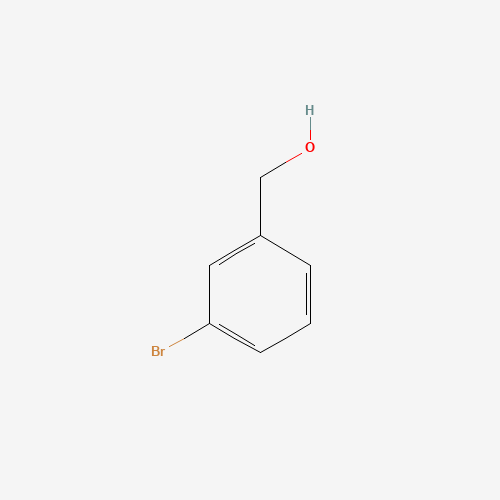
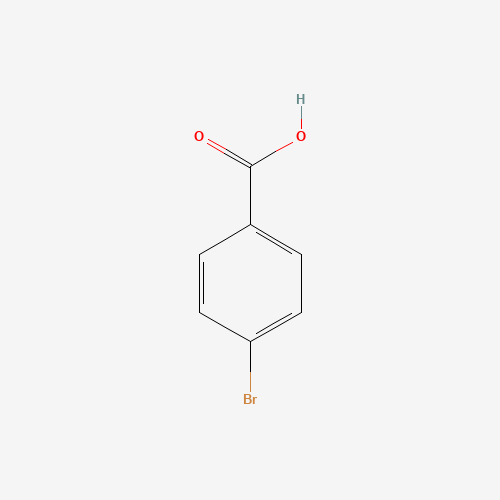
In addition to 3 - Bromobenzoic acid, we also supply other related compounds such as 2 - Bromophenylacetic Acid, 3 - Bromobenzyl Alcohol, and 4 - Bromobenzoic Acid. These compounds have their own unique chemical properties and applications, and they can be used in combination with 3 - Bromobenzoic acid in various synthesis processes.
Conclusion
In conclusion, the reactions of 3 - Bromobenzoic acid with acids are diverse and offer many opportunities for the synthesis of valuable compounds. Whether it is the sulfonation, nitration, esterification, or condensation reactions, each reaction has its own mechanism and application. As a supplier of 3 - Bromobenzoic acid, we are committed to providing high - quality products to support your research and industrial needs. If you are interested in purchasing 3 - Bromobenzoic acid or any of our related products, please feel free to contact us for further discussions and procurement negotiations.
References
- March, J. Advanced Organic Chemistry: Reactions, Mechanisms, and Structure. Wiley, 2007.
- Carey, F. A., & Sundberg, R. J. Advanced Organic Chemistry Part A: Structure and Mechanisms. Springer, 2007.
- Vogel, A. I. Vogel's Textbook of Practical Organic Chemistry. Pearson, 1989.