

Hey there! As a supplier of 3 - Bromobenzaldehyde, I often get asked about the reaction products of 3 - Bromobenzaldehyde and alcohols. So, I thought I'd write this blog to share some insights on this topic.
First off, let's understand what 3 - Bromobenzaldehyde is. It's an organic compound with a bromine atom attached to the third position of the benzene ring and an aldehyde group. Alcohols, on the other hand, are a class of organic compounds containing a hydroxyl (-OH) group.
The Reaction Mechanism
When 3 - Bromobenzaldehyde reacts with alcohols, the main type of reaction that occurs is a condensation reaction. This reaction is typically catalyzed by an acid. The aldehyde group in 3 - Bromobenzaldehyde is electrophilic, and the hydroxyl group in the alcohol is nucleophilic.
The reaction starts with the protonation of the carbonyl oxygen in the aldehyde group by the acid catalyst. This makes the carbonyl carbon more electrophilic, and the oxygen in the hydroxyl group of the alcohol attacks this carbon. After that, a proton transfer occurs, and water is eliminated in a subsequent step, resulting in the formation of an acetal.
The general equation for the reaction between an aldehyde (RCHO) and an alcohol (R'OH) to form an acetal can be written as:
RCHO + 2R'OH ⇌ RCH(OR')₂ + H₂O
In the case of 3 - Bromobenzaldehyde, if we use an alcohol like methanol (CH₃OH), the reaction would be:
3 - BrC₆H₄CHO + 2CH₃OH ⇌ 3 - BrC₆H₄CH(OCH₃)₂ + H₂O
The Reaction Products
Acetals
As mentioned above, the primary reaction products of 3 - Bromobenzaldehyde and alcohols are acetals. These acetals are important in organic synthesis as they can act as protecting groups for aldehydes. For example, if you want to carry out a reaction on other parts of a molecule containing an aldehyde group without affecting the aldehyde, you can convert it to an acetal first.
The acetals formed from 3 - Bromobenzaldehyde and alcohols have unique physical and chemical properties. They are relatively stable under basic conditions but can be hydrolyzed back to the aldehyde and the alcohol under acidic conditions.
Other Possible Products
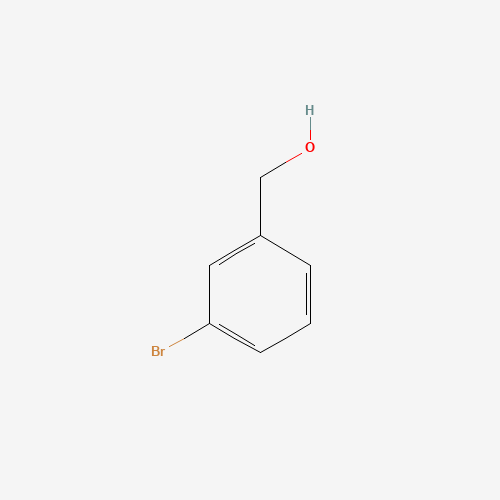
In some cases, side reactions can occur. For instance, if the reaction conditions are not carefully controlled, there might be a reduction of the aldehyde group. The alcohol can act as a reducing agent under certain circumstances, leading to the formation of 3-Bromobenzyl Alcohol. The reaction for this reduction can be represented as:
3 - BrC₆H₄CHO + 2H⁺ + 2e⁻ → 3 - BrC₆H₄CH₂OH
Another possible side reaction is the formation of 3-Bromotoluene. This can happen if there is a decarbonylation process during the reaction. Although this is less common, it can occur under specific reaction conditions such as high temperatures or in the presence of certain catalysts.
Factors Affecting the Reaction
Alcohol Structure
The structure of the alcohol used in the reaction can have a significant impact on the reaction rate and the product distribution. Primary alcohols generally react faster than secondary and tertiary alcohols due to steric hindrance. Secondary and tertiary alcohols have bulkier groups around the hydroxyl group, which makes it more difficult for the oxygen to attack the carbonyl carbon in 3 - Bromobenzaldehyde.
Catalyst
The choice of catalyst is crucial. Acid catalysts such as sulfuric acid, hydrochloric acid, or p - toluenesulfonic acid are commonly used. The strength of the acid can affect the reaction rate. Stronger acids can protonate the carbonyl oxygen more effectively, increasing the electrophilicity of the carbonyl carbon and thus speeding up the reaction.
Reaction Conditions
Temperature, pressure, and reaction time also play important roles. Higher temperatures usually increase the reaction rate, but they can also promote side reactions. The reaction is usually carried out under reflux conditions to ensure that the reactants are in contact for a sufficient time and to prevent the loss of volatile components.
Applications of the Reaction Products
In Pharmaceutical Synthesis
The acetals formed from 3 - Bromobenzaldehyde and alcohols can be used as intermediates in the synthesis of various pharmaceuticals. For example, they can be further modified to introduce other functional groups or to form more complex molecular structures.
In Organic Chemistry Research
These reaction products are valuable tools in organic chemistry research. They can be used to study reaction mechanisms, develop new synthetic methods, and explore the reactivity of different functional groups.
Comparison with Similar Compounds
It's interesting to compare the reaction of 3 - Bromobenzaldehyde with alcohols to that of other bromobenzaldehydes, such as o - Bromobenzaldehyde. The position of the bromine atom on the benzene ring can affect the electronic properties of the aldehyde group. In o - Bromobenzaldehyde, the bromine atom is closer to the aldehyde group, which can cause more steric hindrance and also have a different electronic effect compared to 3 - Bromobenzaldehyde. This can lead to differences in the reaction rate and the product distribution when reacting with alcohols.
Conclusion
In conclusion, the reaction of 3 - Bromobenzaldehyde with alcohols mainly results in the formation of acetals, but side products like 3 - Bromobenzyl Alcohol and 3 - Bromotoluene can also be formed under certain conditions. The reaction is influenced by factors such as alcohol structure, catalyst, and reaction conditions.
If you're in the market for high - quality 3 - Bromobenzaldehyde for your research or industrial applications, I'd love to have a chat with you. Whether you're a pharmaceutical company looking for intermediates or a research institution exploring new synthetic routes, we can provide you with the product you need. Feel free to reach out to discuss your requirements and let's see how we can work together.

References
- Smith, J. G. Organic Chemistry: Principles and Mechanisms. 3rd ed., McGraw - Hill, 2017.
- March, J. Advanced Organic Chemistry: Reactions, Mechanisms, and Structure. 5th ed., Wiley - Interscience, 2001.
- Carey, F. A., & Sundberg, R. J. Advanced Organic Chemistry Part A: Structure and Mechanisms. 5th ed., Springer, 2007.