

As a reliable supplier of 2 - Bromobenzoic Acid, I understand that customers often have questions about the quality standards of this important chemical compound. In this blog post, I will delve into the key quality standards for 2 - Bromobenzoic Acid, providing insights that can help you make informed decisions when purchasing this product.
Chemical Purity
One of the most critical quality standards for 2 - Bromobenzoic Acid is its chemical purity. High - purity 2 - Bromobenzoic Acid is essential for various applications, especially in the pharmaceutical and chemical research industries. Purity is typically expressed as a percentage, with higher percentages indicating a cleaner product.
For most industrial applications, a purity level of at least 98% is required. In pharmaceutical synthesis, where the compound may be used as an intermediate in the production of drugs, an even higher purity level, often above 99%, is necessary. This high purity ensures that the 2 - Bromobenzoic Acid does not introduce impurities that could affect the efficacy or safety of the final product.
To determine the purity of 2 - Bromobenzoic Acid, several analytical techniques are commonly used. High - performance liquid chromatography (HPLC) is one of the most reliable methods. It separates the components of a sample based on their interactions with a stationary phase and a mobile phase. By comparing the peak areas of the 2 - Bromobenzoic Acid and any impurities, the purity percentage can be accurately calculated.
Gas chromatography (GC) can also be used, especially for volatile impurities. Mass spectrometry (MS) can be coupled with either HPLC or GC to provide more detailed information about the chemical structure of the impurities, helping to identify and quantify them precisely.
Physical Properties
The physical properties of 2 - Bromobenzoic Acid are also important quality indicators. These properties include appearance, melting point, and solubility.
- Appearance: Pure 2 - Bromobenzoic Acid typically appears as a white to off - white crystalline powder. Any discoloration, such as yellowing or the presence of dark spots, may indicate the presence of impurities or degradation products. A consistent appearance across batches is a sign of good quality control.
- Melting Point: The melting point of 2 - Bromobenzoic Acid is a well - defined physical constant. The reported melting point range for pure 2 - Bromobenzoic Acid is around 147 - 150°C. Deviations from this range can suggest impurities in the sample. Impurities can lower the melting point and broaden the melting range. Measuring the melting point is a simple yet effective way to quickly assess the quality of the product.
- Solubility: 2 - Bromobenzoic Acid is sparingly soluble in water but soluble in organic solvents such as ethanol, acetone, and chloroform. The solubility behavior can be used to check the quality of the compound. If the solubility in a particular solvent is significantly different from the expected value, it may indicate the presence of contaminants or a change in the chemical structure of the 2 - Bromobenzoic Acid.
Moisture Content
Moisture content is another important quality parameter for 2 - Bromobenzoic Acid. Excessive moisture can lead to various problems, such as chemical degradation, clumping, and reduced shelf life.
The moisture content in 2 - Bromobenzoic Acid should be kept as low as possible. For high - quality products, the moisture content is typically required to be less than 0.5%. Karl Fischer titration is the standard method for measuring moisture content. This method is based on the reaction between iodine, sulfur dioxide, and water in the presence of a base. By accurately measuring the amount of iodine consumed in the reaction, the moisture content in the sample can be determined.
Heavy Metal Content
Heavy metals, such as lead, mercury, cadmium, and arsenic, are highly toxic substances. Even trace amounts of heavy metals in 2 - Bromobenzoic Acid can have serious implications, especially in pharmaceutical and food - related applications.
Therefore, strict limits are set for heavy metal content in 2 - Bromobenzoic Acid. For example, the lead content should be less than 10 ppm (parts per million), and the mercury content should be less than 1 ppm. Inductively coupled plasma mass spectrometry (ICP - MS) is a powerful analytical technique used to detect and quantify heavy metals at very low concentrations. This method can accurately measure multiple heavy metals simultaneously, ensuring that the product meets the required safety standards.
Packaging and Storage
Proper packaging and storage are also crucial for maintaining the quality of 2 - Bromobenzoic Acid. As a supplier, we ensure that our 2 - Bromobenzoic Acid is packaged in high - quality containers that provide good protection against moisture, light, and air.
The product is usually packed in sealed plastic bags or drums, which are then placed in cartons or wooden boxes for additional protection during transportation. For long - term storage, 2 - Bromobenzoic Acid should be kept in a cool, dry, and well - ventilated place. Exposure to high temperatures and humidity can accelerate the degradation of the compound, so it is important to store it under appropriate conditions.
Related Products
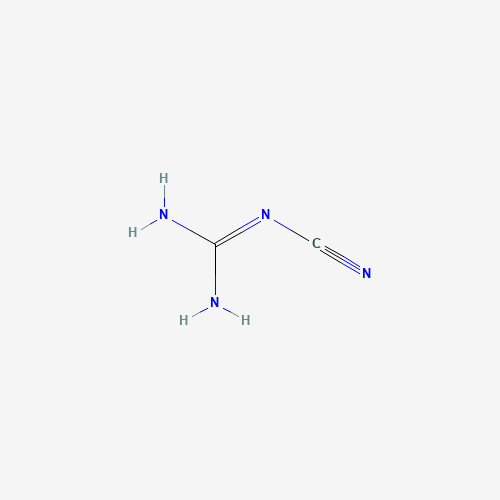
In addition to 2 - Bromobenzoic Acid, we also supply other related high - quality chemical products. For example, 3 - Bromophenylacetic Acid is another important pharmaceutical intermediate with various applications in organic synthesis. Ultra - fine Dicyandiamide DCDA - 6 is a useful compound in the production of resins and adhesives. And 4 - Bromophenethyl Alcohol is widely used in the fragrance and pharmaceutical industries.
Conclusion
In conclusion, the quality standards for 2 - Bromobenzoic Acid cover multiple aspects, including chemical purity, physical properties, moisture content, heavy metal content, and proper packaging and storage. As a supplier, we are committed to meeting these strict quality standards to provide our customers with the highest - quality 2 - Bromobenzoic Acid.
If you are in the market for 2 - Bromobenzoic Acid or any of our other products, we encourage you to contact us for more information and to discuss your specific requirements. Our team of experts is ready to assist you in making the right choice for your applications.

References
- Harris, D. C. (2015). Quantitative Chemical Analysis (9th ed.). W. H. Freeman and Company.
- Skoog, D. A., West, D. M., Holler, F. J., & Crouch, S. R. (2013). Fundamentals of Analytical Chemistry (9th ed.). Brooks/Cole.