

3-Bromotoluene, a crucial chemical compound, finds extensive applications in various industries, including pharmaceuticals, agrochemicals, and materials science. As a leading supplier of 3-Bromotoluene, we understand the significance of providing high-quality products to meet the diverse needs of our customers. In many cases, 3-Bromotoluene is obtained as part of a mixture, and separating it efficiently is essential to ensure its purity and usability. In this blog post, we will explore several effective methods for separating 3-Bromotoluene from a mixture.
Understanding the Mixture and Properties of 3-Bromotoluene
Before delving into the separation methods, it is important to understand the nature of the mixture and the properties of 3-Bromotoluene. 3-Bromotoluene is an aromatic compound with the molecular formula C₇H₇Br. It is a colorless to pale yellow liquid with a characteristic odor. Its boiling point is around 184 - 186 °C, and it has a density of approximately 1.39 g/cm³. The other components in the mixture can vary depending on the synthesis process, but they may include isomers of bromotoluene, unreacted starting materials, or by - products.
Distillation
Distillation is one of the most commonly used methods for separating components in a liquid mixture based on their boiling points. Since 3-Bromotoluene has a specific boiling point, simple distillation or fractional distillation can be employed.
Simple Distillation
Simple distillation is suitable when the difference in boiling points between 3-Bromotoluene and the other components in the mixture is relatively large (usually more than 25 - 30 °C). The mixture is heated in a distillation flask, and as the temperature reaches the boiling point of 3-Bromotoluene, it vaporizes. The vapor then travels through a condenser, where it is cooled and condensed back into a liquid, which is collected in a receiving flask.

However, if the mixture contains components with boiling points close to that of 3-Bromotoluene, simple distillation may not provide a high - purity separation. In such cases, fractional distillation is a better option.
Fractional Distillation
Fractional distillation involves the use of a fractionating column between the distillation flask and the condenser. The fractionating column provides a large surface area for repeated vaporization and condensation. As the vapor rises through the column, components with lower boiling points tend to stay in the vapor phase longer, while those with higher boiling points condense and flow back down into the distillation flask. By carefully controlling the temperature and the rate of heating, 3-Bromotoluene can be separated from other components with similar boiling points.
Extraction
Extraction is another effective method for separating 3-Bromotoluene from a mixture. It is based on the principle of solubility differences between the components in different solvents.
Liquid - Liquid Extraction
In liquid - liquid extraction, a suitable extracting solvent is chosen. The mixture is first dissolved in a solvent in which all the components are soluble. Then, an immiscible solvent is added. 3-Bromotoluene may have a higher solubility in one of the solvents compared to the others. By shaking the two - phase system (the two immiscible solvents) and allowing them to separate, 3-Bromotoluene can be transferred from one solvent phase to the other.
For example, if the mixture is in an aqueous phase and 3-Bromotoluene has a higher solubility in an organic solvent such as dichloromethane, adding dichloromethane to the aqueous mixture and shaking the system will cause 3-Bromotoluene to move into the dichloromethane phase. The two phases can then be separated using a separatory funnel, and the dichloromethane phase containing 3-Bromotoluene can be further processed to obtain pure 3-Bromotoluene, for example, by evaporating the dichloromethane.
Chromatography
Chromatography is a powerful separation technique that can be used to separate 3-Bromotoluene from a mixture, especially when high - purity separation is required.
Column Chromatography
In column chromatography, a stationary phase (such as silica gel or alumina) is packed into a column. The mixture is loaded onto the top of the column, and a mobile phase (a solvent or a mixture of solvents) is passed through the column. Different components in the mixture have different affinities for the stationary phase and the mobile phase. Components with a higher affinity for the mobile phase will move through the column faster, while those with a higher affinity for the stationary phase will move more slowly.
By carefully selecting the stationary phase and the mobile phase, 3-Bromotoluene can be separated from other components in the mixture. The eluent (the liquid that comes out of the column) is collected in fractions, and each fraction can be analyzed to determine the presence and purity of 3-Bromotoluene.
Gas Chromatography
Gas chromatography is mainly used for analytical purposes but can also be used for preparative separation on a small scale. In gas chromatography, the mixture is vaporized and injected into a column filled with a stationary phase. A carrier gas (such as helium) is used to carry the vaporized components through the column. The separation is based on the differences in the interaction of the components with the stationary phase and the carrier gas. The separated components are detected as they exit the column, and by collecting the appropriate fractions, pure 3-Bromotoluene can be obtained.
Crystallization
If the mixture contains components that have different solubilities in a particular solvent as a function of temperature, crystallization can be used to separate 3-Bromotoluene.
The mixture is dissolved in a suitable solvent at an elevated temperature to form a saturated solution. As the solution cools, the solubility of the components decreases. If 3-Bromotoluene has a different solubility behavior compared to the other components, it may crystallize out first. The crystals can then be separated from the remaining solution by filtration.
Importance of Separation for Our Supply
As a 3-Bromotoluene supplier, the separation process is of utmost importance. High - purity 3-Bromotoluene is required for many applications. In the pharmaceutical industry, for example, impurities in 3-Bromotoluene can affect the quality and safety of the final drug product. By using advanced separation techniques, we can ensure that our 3-Bromotoluene meets the strict quality standards of our customers.
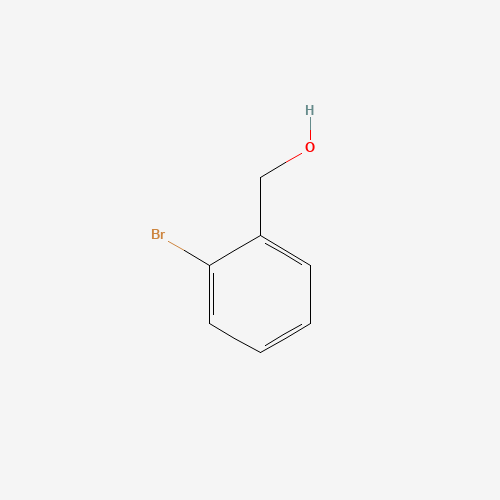
We also offer related products such as 2-Bromobenzyl Alcohol, 4-Bromophenethyl Alcohol, and 4-Bromoethylbenzene. These products are also carefully synthesized and purified to provide high - quality chemical solutions.
Conclusion
Separating 3-Bromotoluene from a mixture is a complex but essential process. Distillation, extraction, chromatography, and crystallization are all effective methods, each with its own advantages and limitations. By understanding the properties of 3-Bromotoluene and the nature of the mixture, the most appropriate separation method can be chosen.
As a reliable 3-Bromotoluene supplier, we are committed to providing high - quality products. If you are in need of 3-Bromotoluene or any of our related products, we encourage you to contact us for procurement and further discussions. Our team of experts is ready to assist you in finding the best solutions for your specific needs.
References
- "Organic Chemistry" by Paula Yurkanis Bruice.
- "Separation Process Principles" by Phillip C. Wankat.
- "Chromatography: Principles and Applications" by Peter Scott.