

4 - Bromobenzoic acid is a crucial organic compound widely used in various industries, including pharmaceuticals, agrochemicals, and materials science. As a supplier of 4 - Bromobenzoic acid, I understand the importance of not only providing high - quality products but also promoting sustainable practices in its handling and recycling. In this blog, I will share some effective ways to recycle 4 - Bromobenzoic acid, which can not only reduce waste but also cut down on production costs.
1. Understanding the Structure and Properties of 4 - Bromobenzoic Acid
Before delving into the recycling methods, it's essential to understand the basic structure and properties of 4 - Bromobenzoic acid. It has a benzene ring with a bromine atom at the 4 - position and a carboxylic acid group. This structure gives it certain chemical reactivity and solubility characteristics. It is sparingly soluble in water but soluble in organic solvents such as ethanol, ether, and acetone. These properties play a significant role in the recycling process.
2. Recovery from Reaction Mixtures
In many chemical synthesis processes, 4 - Bromobenzoic acid is used as a reactant or intermediate. After the reaction, it may remain in the reaction mixture in an unreacted form or as a by - product. One of the common methods to recover it is through extraction.
Extraction with Organic Solvents
Since 4 - Bromobenzoic acid is soluble in organic solvents, we can use solvents like ethyl acetate or dichloromethane to extract it from the aqueous reaction mixture. First, the reaction mixture is transferred to a separatory funnel. Then, an appropriate amount of the organic solvent is added. After shaking the funnel gently and allowing it to stand for some time, the mixture will separate into two layers. The organic layer containing 4 - Bromobenzoic acid can be carefully separated.
Acid - Base Extraction
Another useful technique is acid - base extraction. 4 - Bromobenzoic acid is an acid, so it can react with a base to form a water - soluble salt. By adding a dilute solution of sodium hydroxide to the reaction mixture, 4 - Bromobenzoic acid will react to form sodium 4 - bromobenzoate, which dissolves in the aqueous phase. The aqueous phase can then be separated from the organic phase. Subsequently, adding a strong acid like hydrochloric acid to the aqueous phase will convert the sodium 4 - bromobenzoate back to 4 - Bromobenzoic acid, which will precipitate out and can be filtered and collected.
3. Recycling from Waste Streams
In industrial production, 4 - Bromobenzoic acid may end up in waste streams. Recycling from these waste streams is an important way to reduce environmental impact and save resources.
Distillation
If the waste stream contains 4 - Bromobenzoic acid along with other volatile organic compounds, distillation can be a viable option. The waste mixture is heated in a distillation apparatus. Different compounds have different boiling points. By carefully controlling the temperature, 4 - Bromobenzoic acid can be vaporized and then condensed and collected separately. However, this method requires precise temperature control and appropriate equipment to ensure high - purity recovery.

Chromatography
Chromatography is a powerful separation technique that can be used to recycle 4 - Bromobenzoic acid from complex waste mixtures. Column chromatography, for example, can separate different components based on their affinity for the stationary phase and the mobile phase. The waste mixture is loaded onto the column, and a suitable mobile phase is passed through it. Different compounds will move through the column at different rates, allowing for the separation and collection of 4 - Bromobenzoic acid.
4. Purification of Recycled 4 - Bromobenzoic Acid
After recovery, the recycled 4 - Bromobenzoic acid may contain impurities. Purification is necessary to obtain a product with high quality.
Recrystallization
Recrystallization is a common purification method. The recycled 4 - Bromobenzoic acid is dissolved in a hot solvent (such as ethanol or a mixture of solvents). As the solution cools down slowly, the 4 - Bromobenzoic acid will crystallize out, while most of the impurities will remain in the solution. The crystals can be filtered and washed with a small amount of cold solvent to remove any remaining impurities.
Melting Point Determination
To ensure the purity of the recycled 4 - Bromobenzoic acid, melting point determination can be carried out. Pure 4 - Bromobenzoic acid has a specific melting point range. If the measured melting point of the recycled product is close to the literature value, it indicates a relatively high purity.
5. Applications of Recycled 4 - Bromobenzoic Acid
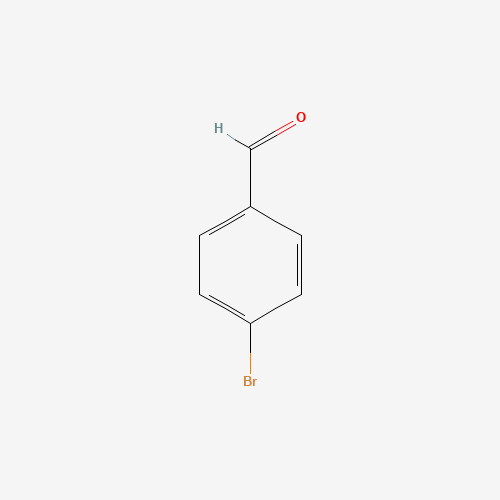
Recycled 4 - Bromobenzoic acid can be reused in many applications. In the pharmaceutical industry, it can be used as an intermediate for the synthesis of drugs. For example, it can be further reacted to produce o - Bromobenzyl Bromide, p - Bromobenzaldehyde, and Methyl 4 - Bromobenzoate, which are important pharmaceutical intermediates.
In the agrochemical field, it can be used in the synthesis of pesticides and herbicides. In materials science, it can be used to modify the properties of polymers and other materials.
6. Conclusion and Call to Action
Recycling 4 - Bromobenzoic acid is not only an environmentally friendly practice but also a cost - effective one. By implementing the methods mentioned above, we can reduce waste, conserve resources, and contribute to a more sustainable chemical industry.
If you are interested in purchasing high - quality 4 - Bromobenzoic acid, whether it is newly produced or recycled, feel free to contact us for procurement discussions. We are committed to providing you with the best products and services to meet your specific needs.
References
- Smith, J. Organic Chemistry Laboratory Manual. 3rd ed., XYZ Publishing, 2018.
- Brown, A. Chemical Recycling in the Pharmaceutical Industry. Journal of Sustainable Chemistry, 2020, 15(2), 123 - 135.
- Green, C. Separation Techniques in Chemical Engineering. ABC Press, 2019.