

p-Bromobenzyl bromide is a crucial organic compound widely used in the synthesis of pharmaceuticals, agrochemicals, and other fine chemicals. As a reliable supplier of p-Bromobenzyl bromide, I understand the importance of its purity for various applications. In this blog, I will share several effective methods to purify p-Bromobenzyl bromide, ensuring its high quality and performance.
Understanding p-Bromobenzyl Bromide
Before delving into the purification methods, it's essential to understand the properties of p-Bromobenzyl bromide. It is a white to light yellow crystalline solid with a molecular formula of C₇H₆Br₂. It is sensitive to moisture and can react with water to form p-bromobenzyl alcohol and hydrobromic acid. Impurities in p-Bromobenzyl bromide can affect its reactivity and the quality of the final products in subsequent reactions. Therefore, purification is a necessary step to obtain a high-purity product.
Common Impurities in p-Bromobenzyl Bromide
The impurities in p-Bromobenzyl bromide can come from various sources, such as unreacted starting materials, side reaction products, and solvents. Some common impurities include p-bromotoluene, p-bromobenzyl alcohol, and other brominated by-products. These impurities need to be removed to achieve a high-purity p-Bromobenzyl bromide.
Purification Methods
1. Recrystallization
Recrystallization is a widely used method for purifying solid compounds. It takes advantage of the different solubilities of the compound and its impurities in a suitable solvent at different temperatures.
Procedure:
- Select a suitable solvent: A good solvent for recrystallization should dissolve the compound at high temperatures but have low solubility at low temperatures. For p-Bromobenzyl bromide, solvents like ethanol, acetone, or a mixture of solvents can be considered.
- Dissolve the crude p-Bromobenzyl bromide: Heat the solvent to near its boiling point and add the crude p-Bromobenzyl bromide slowly with stirring until it is completely dissolved. The amount of solvent should be just enough to dissolve the compound.
- Filter the hot solution: To remove any insoluble impurities, filter the hot solution through a pre - heated filter paper or a filter funnel. This step helps to separate the solid impurities from the solution.
- Cool the solution: Allow the filtered solution to cool slowly to room temperature and then place it in an ice bath to promote crystallization. As the temperature decreases, the solubility of p-Bromobenzyl bromide decreases, and it crystallizes out of the solution.
- Collect the crystals: Filter the crystals using a Buchner funnel under vacuum. Wash the crystals with a small amount of cold solvent to remove any remaining impurities on the surface of the crystals.
- Dry the crystals: Place the collected crystals in a desiccator or an oven at a low temperature to remove any residual solvent.
Recrystallization can effectively remove impurities that have different solubilities from p-Bromobenzyl bromide. However, it may require several cycles of recrystallization to achieve a high level of purity.
2. Column Chromatography
Column chromatography is a powerful separation technique that can separate compounds based on their different affinities for a stationary phase and a mobile phase.

Procedure:
- Prepare the column: Pack a glass column with a suitable stationary phase, such as silica gel or alumina. The stationary phase should be evenly packed to ensure a uniform flow of the mobile phase.
- Load the sample: Dissolve the crude p-Bromobenzyl bromide in a small amount of a suitable solvent (e.g., dichloromethane) and carefully load the solution onto the top of the column.
- Elute the compounds: Pass a mobile phase (e.g., a mixture of hexane and ethyl acetate) through the column. The different compounds in the sample will move through the column at different rates depending on their interactions with the stationary phase and the mobile phase.
- Collect the fractions: As the compounds elute from the column, collect the fractions in separate test tubes. Analyze each fraction using thin - layer chromatography (TLC) or other analytical methods to identify the fractions containing pure p-Bromobenzyl bromide.
- Evaporate the solvent: Combine the fractions containing pure p-Bromobenzyl bromide and evaporate the solvent using a rotary evaporator to obtain the purified compound.
Column chromatography can separate p-Bromobenzyl bromide from impurities with similar structures and properties. It is a more precise purification method compared to recrystallization but is more time - consuming and requires more equipment.
3. Distillation
Distillation is a separation method based on the different boiling points of the components in a mixture. Although p-Bromobenzyl bromide is a solid at room temperature, it can be distilled under reduced pressure to separate it from impurities with different boiling points.
Procedure:
- Set up the distillation apparatus: Assemble a distillation apparatus, including a round - bottom flask, a condenser, a receiving flask, and a vacuum pump.
- Add the crude p-Bromobenzyl bromide: Place the crude p-Bromobenzyl bromide in the round - bottom flask.
- Apply vacuum: Connect the distillation apparatus to a vacuum pump and reduce the pressure inside the system. This lowers the boiling point of p-Bromobenzyl bromide and reduces the risk of decomposition during distillation.
- Heat the flask: Slowly heat the round - bottom flask using a heating mantle. As the temperature rises, p-Bromobenzyl bromide vaporizes and condenses in the condenser, collecting in the receiving flask.
- Collect the distillate: Collect the fraction that distills at the appropriate temperature range for p-Bromobenzyl bromide. The distillate can be further analyzed to determine its purity.
Distillation is suitable for removing volatile impurities from p-Bromobenzyl bromide. However, it requires careful control of the temperature and pressure to avoid decomposition of the compound.
Quality Control
After purification, it is essential to perform quality control to ensure the purity of p-Bromobenzyl bromide. Some common analytical methods for quality control include:
- Melting Point Determination: Measure the melting point of the purified p-Bromobenzyl bromide using a melting point apparatus. A pure compound has a sharp melting point range, while impurities can cause a broadening of the melting point range and a decrease in the melting point.
- Nuclear Magnetic Resonance (NMR) Spectroscopy: NMR spectroscopy can provide information about the structure and purity of p-Bromobenzyl bromide. By analyzing the NMR spectrum, we can identify the presence of impurities and determine the chemical structure of the compound.
- High - Performance Liquid Chromatography (HPLC): HPLC is a sensitive analytical technique that can separate and quantify the components in a sample. It can be used to determine the purity of p-Bromobenzyl bromide and detect the presence of trace impurities.
Conclusion
Purifying p-Bromobenzyl bromide is a crucial step to ensure its quality and performance in various applications. Recrystallization, column chromatography, and distillation are effective methods for removing impurities from p-Bromobenzyl bromide. Each method has its advantages and limitations, and the choice of method depends on the nature and amount of impurities, as well as the required level of purity.
As a reliable supplier of p-Bromobenzyl bromide, we are committed to providing high - quality products. We use advanced purification techniques and strict quality control measures to ensure that our p-Bromobenzyl bromide meets the highest standards. If you are interested in purchasing high - purity p-Bromobenzyl bromide or have any questions about its purification or application, please feel free to contact us for further discussion and negotiation. We are always ready to provide you with the best solutions and services.
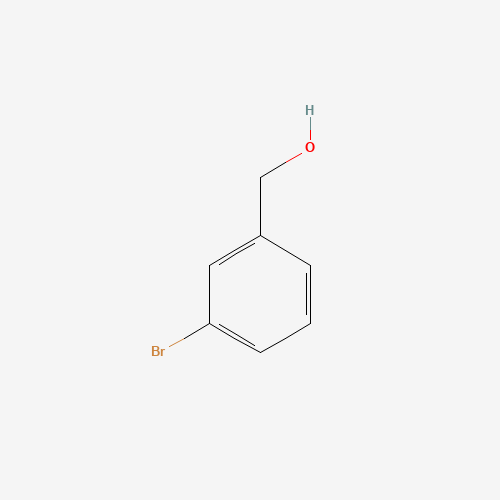
In addition to p-Bromobenzyl bromide, we also supply other related products such as 3-Bromobenzyl Alcohol, Methyl 4-Bromobenzoate, and Amidinothiourea. These products are also widely used in the pharmaceutical and chemical industries.
References
- Smith, J. A. (2015). Organic Chemistry Laboratory Techniques. Wiley.
- Vogel, A. I. (1989). Vogel's Textbook of Practical Organic Chemistry. Longman.
- Snyder, L. R., Kirkland, J. J., & Glajch, J. L. (2010). Practical HPLC Method Development. Wiley.