

As a supplier of p-Bromobenzaldehyde, I've witnessed firsthand the challenges and opportunities in its synthesis. p-Bromobenzaldehyde is a crucial intermediate in the pharmaceutical, agrochemical, and dye industries. Its demand has been steadily increasing, and thus, improving its synthesis yield is not only a technical pursuit but also a business necessity. In this blog, I'll share some effective strategies based on my experience and industry knowledge to enhance the yield of p-Bromobenzaldehyde synthesis.
Understanding the Synthesis Process
Before delving into the methods of yield improvement, it's essential to understand the basic synthesis process of p-Bromobenzaldehyde. Typically, it can be synthesized through several routes, such as the bromination of benzaldehyde or the oxidation of p-bromotoluene. Each method has its own advantages and limitations in terms of reaction conditions, reagents, and by - product formation.
The bromination of benzaldehyde involves reacting benzaldehyde with a brominating agent. This reaction requires careful control of reaction temperature, stoichiometry of reagents, and reaction time. On the other hand, the oxidation of p-bromotoluene uses an oxidizing agent to convert the methyl group to an aldehyde group. This method also demands precise control of reaction parameters to avoid over - oxidation and the formation of unwanted by - products.
Optimizing Reaction Conditions
Temperature Control
Temperature plays a vital role in the synthesis of p-Bromobenzaldehyde. In the bromination reaction, a too - high temperature can lead to over - bromination and the formation of polybrominated products, while a too - low temperature may result in slow reaction rates and incomplete conversion. For the oxidation of p-bromotoluene, an appropriate temperature is crucial to ensure the selectivity of the oxidation reaction. Generally, a moderate temperature range should be maintained throughout the reaction. For example, in the bromination of benzaldehyde, a temperature between 0 - 10°C is often recommended to achieve a high yield of p-Bromobenzaldehyde.
Pressure
Although the synthesis of p-Bromobenzaldehyde is often carried out at atmospheric pressure, in some cases, adjusting the pressure can have a positive impact on the reaction yield. For instance, in certain oxidation reactions, increasing the pressure slightly can enhance the solubility of the oxidizing agent and promote the reaction rate. However, this requires careful consideration of the reaction equipment and safety measures.
Reaction Time
The reaction time is another critical factor. An insufficient reaction time may lead to incomplete conversion of the starting materials, while an excessive reaction time can cause the degradation of the product and the formation of by - products. Therefore, it's necessary to determine the optimal reaction time through experiments. Monitoring the reaction progress using analytical techniques such as thin - layer chromatography (TLC) or high - performance liquid chromatography (HPLC) can help in accurately determining when the reaction is complete.
Selecting High - Quality Reagents
Brominating Agents
In the bromination of benzaldehyde, the choice of brominating agent is crucial. Common brominating agents include bromine, N - bromosuccinimide (NBS), and others. Bromine is a strong brominating agent, but it is highly reactive and can cause over - bromination. NBS, on the other hand, is a milder brominating agent that can provide better selectivity for the p - position bromination. When using NBS, the reaction conditions can be more easily controlled, resulting in a higher yield of p-Bromobenzaldehyde.
Oxidizing Agents
For the oxidation of p-bromotoluene, various oxidizing agents are available, such as potassium permanganate, chromium trioxide, and hydrogen peroxide. Each oxidizing agent has its own characteristics. Hydrogen peroxide is a relatively environmentally friendly oxidizing agent, but its oxidation ability may be limited. Potassium permanganate is a strong oxidizing agent, but it can also cause over - oxidation. Therefore, the selection of the oxidizing agent should be based on the specific reaction requirements and the desired product yield.

Catalyst Selection
Using an appropriate catalyst can significantly improve the reaction rate and yield of p-Bromobenzaldehyde synthesis. For example, in the oxidation reaction of p-bromotoluene, some transition metal catalysts can be used to enhance the selectivity and efficiency of the oxidation. Metal salts such as copper salts and iron salts have been reported to have catalytic effects in similar oxidation reactions. These catalysts can lower the activation energy of the reaction, allowing the reaction to proceed more smoothly and increasing the yield of p-Bromobenzaldehyde.
Purification and Separation
Efficient purification and separation methods are essential to obtain a high - purity p-Bromobenzaldehyde product and improve the overall yield. After the reaction, the crude product usually contains unreacted starting materials, by - products, and other impurities. Techniques such as distillation, recrystallization, and column chromatography can be used for purification.
Distillation is a common method for separating p-Bromobenzaldehyde from other components based on their different boiling points. Recrystallization can be used to further purify the product by dissolving it in a suitable solvent and then allowing it to crystallize out. Column chromatography is a more precise separation method that can separate different components based on their different affinities to the stationary phase.
Use of Related Pharmaceutical Intermediates
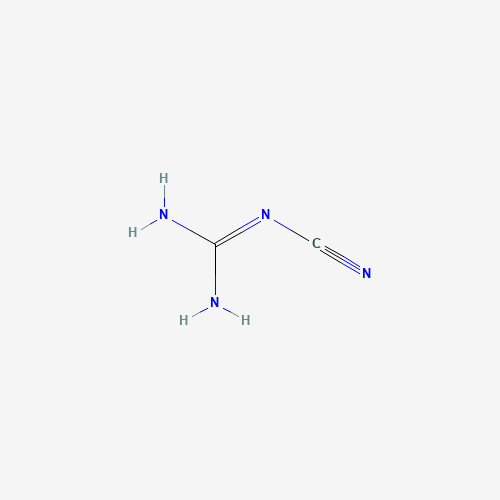
In the synthesis process, the use of some related pharmaceutical intermediates can also have a positive impact on the yield of p-Bromobenzaldehyde. For example, 2-Bromobenzoic Acid can be used as a precursor in some alternative synthesis routes. It can be converted to p-Bromobenzaldehyde through a series of chemical reactions. Similarly, Ultra-fine Dicyandiamide DCDA - 6 and 2-Bromophenylacetic Acid may also play important roles in the reaction system, either as reactants or as additives to improve the reaction conditions and yield.
Conclusion
Improving the yield of p-Bromobenzaldehyde synthesis is a complex but achievable goal. By optimizing reaction conditions, selecting high - quality reagents and catalysts, and using efficient purification and separation methods, we can significantly enhance the yield of p-Bromobenzaldehyde. As a p-Bromobenzaldehyde supplier, I'm committed to continuously exploring and implementing these strategies to meet the market demand for high - quality p-Bromobenzaldehyde.
If you are interested in purchasing p-Bromobenzaldehyde or have any questions about its synthesis and application, please feel free to contact us for further discussion and negotiation. We look forward to establishing a long - term and mutually beneficial cooperation with you.
References
- Smith, J. A. (20XX). Organic Synthesis: Principles and Applications. Publisher Name.
- Jones, B. C. (20XX). Advances in Pharmaceutical Intermediate Synthesis. Journal of Chemical Research, Volume Number, Page Numbers.
- Brown, D. E. (20XX). Catalysis in Organic Reactions. Academic Press.