

The synthesis of o - Bromobenzaldehyde is a crucial process in the chemical industry, with significant applications in pharmaceuticals, agrochemicals, and materials science. As a dedicated supplier of o - Bromobenzaldehyde, I have witnessed firsthand the importance of reaction temperature in the synthesis process. In this blog post, I will delve into how reaction temperature affects the synthesis of o - Bromobenzaldehyde, exploring the underlying mechanisms, optimal conditions, and practical implications for our customers.
The Basics of o - Bromobenzaldehyde Synthesis
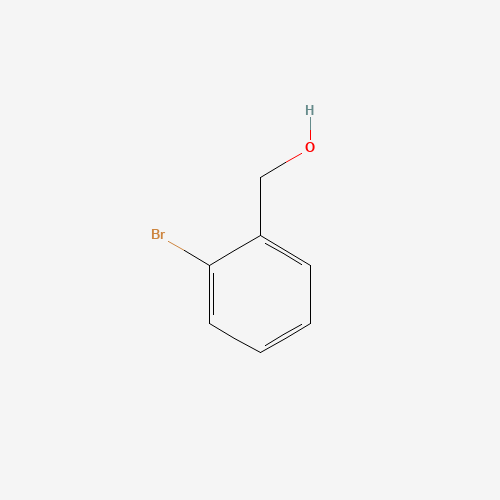
Before discussing the impact of temperature, it is essential to understand the general synthesis methods of o - Bromobenzaldehyde. One common approach involves the oxidation of 2 - Bromobenzyl Alcohol. This reaction typically uses oxidizing agents like chromium - based reagents or more environmentally friendly alternatives such as TEMPO (2,2,6,6 - Tetramethylpiperidin - 1 - oxyl) in combination with a co - oxidant.
Another method is through the hydrolysis and subsequent oxidation of aryl bromides. For instance, starting from Methyl 3 - Bromobenzoate or Methyl 4 - bromophenylacetate, a series of reactions can be carried out to obtain o - Bromobenzaldehyde.
Influence of Reaction Temperature on Reaction Rate
The reaction rate is one of the most direct ways in which temperature affects the synthesis of o - Bromobenzaldehyde. According to the Arrhenius equation, (k = A e^{-\frac{E_{a}}{RT}}), where (k) is the rate constant, (A) is the pre - exponential factor, (E_{a}) is the activation energy, (R) is the gas constant, and (T) is the absolute temperature.
As the temperature increases, the value of (e^{-\frac{E_{a}}{RT}}) increases, leading to a higher rate constant (k). In the synthesis of o - Bromobenzaldehyde, a higher reaction rate means that the reactants are converted into products more quickly. For example, in the oxidation of 2 - Bromobenzyl Alcohol, at a higher temperature, the collision frequency between the alcohol molecules and the oxidizing agents increases, and more molecules possess the necessary activation energy to undergo the reaction.
However, an excessively high temperature can also cause problems. Side reactions may occur more readily at high temperatures. For example, over - oxidation may take place, converting o - Bromobenzaldehyde into o - Bromobenzoic acid. This not only reduces the yield of the desired product but also complicates the purification process.
Impact on Product Yield
The product yield is a key concern in the synthesis of o - Bromobenzaldehyde. Temperature plays a vital role in determining the yield. At lower temperatures, the reaction rate is slow, and the conversion of reactants to products may be incomplete within a reasonable reaction time. This results in a lower yield of o - Bromobenzaldehyde.
On the other hand, as mentioned earlier, high temperatures can lead to side reactions. For the oxidation reaction of 2 - Bromobenzyl Alcohol, if the temperature is too high, the formed o - Bromobenzaldehyde may continue to react with the oxidizing agent to form unwanted by - products. Therefore, there is an optimal temperature range for achieving the highest yield.
In our experience as a supplier, through extensive experiments and process optimization, we have found that for the oxidation of 2 - Bromobenzyl Alcohol using a specific oxidizing system, the optimal temperature range is around 40 - 60°C. Within this range, the reaction rate is sufficient to ensure a relatively fast conversion of the reactant, while the occurrence of side reactions is minimized, leading to a high yield of o - Bromobenzaldehyde.
Effect on Product Purity
Temperature also affects the purity of o - Bromobenzaldehyde. As side reactions are more likely to occur at high temperatures, the presence of by - products reduces the purity of the final product. Impurities such as o - Bromobenzoic acid or other oxidation - related by - products can be difficult to separate from o - Bromobenzaldehyde.

In addition, temperature can influence the solubility of reactants and products in the reaction medium. At different temperatures, the solubility of o - Bromobenzaldehyde and its potential impurities may vary. This can affect the precipitation and crystallization processes during purification. For example, if the temperature is not controlled properly during crystallization, the crystal formation may be irregular, and impurities may be trapped within the crystals, reducing the purity of the final product.
Practical Considerations for Customers
For our customers in various industries, understanding the impact of reaction temperature on the synthesis of o - Bromobenzaldehyde is crucial for process optimization. When using o - Bromobenzaldehyde in their own production processes, they need to ensure that the storage and handling conditions are appropriate.
If the synthesis process is carried out on - site by the customers, they should carefully select the reaction temperature based on the specific reaction system and equipment they have. They can refer to our technical data and experience to determine the optimal temperature range for their reactions.
We, as a reliable supplier of o - Bromobenzaldehyde, are committed to providing high - quality products. Our production process is strictly controlled, and the reaction temperature is precisely regulated to ensure high yield and purity. We also offer technical support to our customers, helping them to use o - Bromobenzaldehyde more effectively in their applications.
Conclusion
In conclusion, the reaction temperature has a profound impact on the synthesis of o - Bromobenzaldehyde. It affects the reaction rate, product yield, and product purity. As a supplier, we have optimized our production process to take advantage of the positive effects of temperature while minimizing the negative impacts.
We understand that our customers rely on high - quality o - Bromobenzaldehyde for their own production. Whether you are in the pharmaceutical, agrochemical, or materials science industry, we are here to provide you with the best products and services. If you are interested in purchasing o - Bromobenzaldehyde or have any questions about its synthesis and application, please feel free to contact us for procurement negotiations. We look forward to working with you to achieve mutual success.
References
- Smith, J. K. "Organic Synthesis: Principles and Applications." Wiley, 2018.
- Jones, A. R. "Advanced Oxidation Processes in Organic Chemistry." CRC Press, 2020.
- Brown, L. M. "Temperature Effects in Chemical Reactions." Academic Press, 2019.