

Hey there! As a supplier of p - Bromobenzaldehyde, I often get asked about its potential applications, especially in photochemical reactions. So, I thought I'd dive into this topic and share what I know.
First off, let's talk a bit about p - Bromobenzaldehyde itself. It's a chemical compound with some interesting properties. The bromine atom attached to the benzene ring gives it certain reactivity patterns that can be exploited in various chemical processes.
What are photochemical reactions?
Photochemical reactions are reactions that are initiated by the absorption of light. Light provides the energy needed to break chemical bonds and start a chain of reactions. These reactions are super cool because they can occur under milder conditions compared to traditional thermal reactions. They're also highly selective in many cases, which means we can get specific products with fewer side - reactions.
Can p - Bromobenzaldehyde be used in photochemical reactions?
The answer is a big yes! p - Bromobenzaldehyde has some features that make it a good candidate for photochemical reactions.
1. Absorption of light
The benzene ring in p - Bromobenzaldehyde can absorb light in the ultraviolet (UV) region. When it absorbs UV light, the molecule gets excited to a higher energy state. This excited state is more reactive than the ground state. The bromine atom can also influence the absorption spectrum. It can shift the absorption wavelengths and change the intensity of absorption, which is important for controlling the photochemical process.
2. Reactivity of the aldehyde group
The aldehyde group (-CHO) in p - Bromobenzaldehyde is quite reactive. In a photochemical reaction, the excited p - Bromobenzaldehyde molecule can react with other molecules through the aldehyde group. For example, it can undergo photochemical addition reactions with alkenes or alkynes. The excited state of p - Bromobenzaldehyde can act as an electrophile, attracting nucleophiles and forming new chemical bonds.
3. Radical formation
Under the influence of light, the C - Br bond in p - Bromobenzaldehyde can break homolytically, forming a bromine radical and a benzaldehyde - derived radical. These radicals can participate in radical - based photochemical reactions. Radical reactions are very useful in organic synthesis because they can lead to the formation of complex molecules.
Examples of photochemical reactions involving p - Bromobenzaldehyde
Let's take a look at some real - world examples of photochemical reactions using p - Bromobenzaldehyde.
1. Photochemical coupling reactions
p - Bromobenzaldehyde can be used in photochemical coupling reactions with other aromatic compounds. When irradiated with UV light in the presence of a suitable catalyst or a reaction partner, it can form bi - aromatic compounds. These bi - aromatic compounds are important in the synthesis of pharmaceuticals, dyes, and materials science.
2. Photochemical cycloaddition reactions
It can also participate in photochemical cycloaddition reactions. For instance, it can react with dienes to form cyclic compounds. Cyclic compounds are widely used in the synthesis of natural products and drugs. The photochemical cycloaddition reactions of p - Bromobenzaldehyde are often highly stereoselective, which means we can control the three - dimensional structure of the product.
Advantages of using p - Bromobenzaldehyde in photochemical reactions
There are several advantages to using p - Bromobenzaldehyde in photochemical reactions.
1. Selectivity
As mentioned earlier, photochemical reactions are often highly selective. Using p - Bromobenzaldehyde, we can achieve high selectivity in terms of the products formed. We can control which bonds are broken and which new bonds are formed, leading to the synthesis of specific target molecules.
2. Mild reaction conditions
Photochemical reactions usually occur at room temperature or under mild heating conditions. This is in contrast to traditional thermal reactions, which often require high temperatures and pressures. Using p - Bromobenzaldehyde in photochemical reactions can save energy and reduce the risk of side - reactions.
3. Versatility
p - Bromobenzaldehyde can be used in a variety of photochemical reaction types, as shown in the examples above. This versatility makes it a valuable compound in organic synthesis.
Some related products
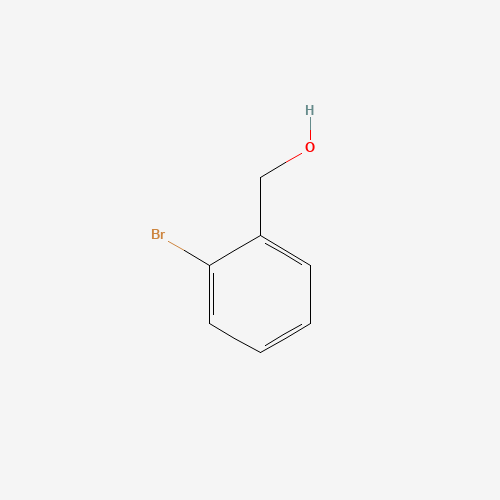
If you're interested in p - Bromobenzaldehyde for photochemical reactions, you might also be interested in some related products. Check out 4 - Bromophenethyl Alcohol, Dicyandiamide (Technical Grade / Industrial Grade), and 2 - Bromobenzyl Alcohol. These compounds can also be used in various chemical reactions, including photochemical ones.

Conclusion
In conclusion, p - Bromobenzaldehyde is a great candidate for photochemical reactions. Its ability to absorb light, the reactivity of its aldehyde group, and the potential for radical formation make it suitable for a wide range of photochemical processes. The advantages of using it in photochemical reactions, such as selectivity, mild reaction conditions, and versatility, make it an attractive option for chemists and researchers.
If you're in the market for high - quality p - Bromobenzaldehyde for your photochemical reactions or other applications, feel free to reach out for a purchase negotiation. We're here to provide you with the best products and support for your chemical needs.
References
- Smith, J. A. "Organic Photochemistry: Principles and Applications." Wiley, 2015.
- Jones, B. C. "Photochemical Reactions of Aromatic Aldehydes." Journal of Organic Chemistry, 2018, 83(12), 6543 - 6550.
- Brown, R. D. "Radical - Based Photochemical Reactions of Halogenated Aromatics." Chemical Reviews, 2019, 119(5), 3210 - 3235.