

In recent years, the field of electrochemical sensors has witnessed remarkable growth, driven by the increasing demand for sensitive, selective, and reliable detection methods in various applications, including environmental monitoring, medical diagnostics, and food safety. The choice of materials plays a crucial role in the performance of electrochemical sensors, and organic compounds have emerged as promising candidates due to their diverse chemical structures and tunable properties. Among these compounds, 3 - Bromobenzoic Acid has attracted attention for its potential use in electrochemical sensors. As a trusted supplier of 3 - Bromobenzoic Acid, I am excited to explore this topic and share insights into its possible applications in electrochemical sensor technology.
Chemical Properties of 3 - Bromobenzoic Acid
3 - Bromobenzoic Acid, with the molecular formula C₇H₅BrO₂, is an aromatic carboxylic acid substituted with a bromine atom at the 3 - position of the benzene ring. This substitution imparts unique chemical and physical properties to the compound. The presence of the bromine atom increases the electron - withdrawing ability of the molecule, which can influence its reactivity and interaction with other substances. The carboxylic acid group (-COOH) is a polar functional group that can participate in acid - base reactions, hydrogen bonding, and coordination with metal ions. These properties make 3 - Bromobenzoic Acid a versatile compound that can potentially be used in electrochemical sensors.
Electrochemical Behavior
The electrochemical behavior of 3 - Bromobenzoic Acid is of particular interest when considering its use in sensors. In an electrochemical cell, the compound can undergo redox reactions at the electrode surface. The bromine atom and the carboxylic acid group can be involved in electron transfer processes, leading to the generation of an electrical signal. For example, the oxidation of the carboxylic acid group or the reduction of the bromine - containing moiety can result in changes in the current or potential, which can be measured and correlated with the concentration of the analyte.
The redox potential of 3 - Bromobenzoic Acid is influenced by factors such as the pH of the solution, the nature of the electrode material, and the presence of other substances. In acidic solutions, the carboxylic acid group is protonated, which can affect its oxidation potential. On the other hand, in basic solutions, the deprotonated form of the carboxylic acid can have different electrochemical properties. The choice of electrode material also plays a significant role. For instance, noble metal electrodes such as gold and platinum are often used due to their high conductivity and stability. Carbon - based electrodes, such as glassy carbon or carbon nanotubes, can also be employed, offering advantages such as low cost and ease of modification.
Sensing Mechanisms
There are several potential sensing mechanisms that can involve 3 - Bromobenzoic Acid in electrochemical sensors.
Direct Detection
In direct detection, the analyte interacts directly with 3 - Bromobenzoic Acid at the electrode surface. For example, if the analyte is a reducing agent, it can react with the oxidized form of 3 - Bromobenzoic Acid, leading to a change in the electrochemical signal. This change can be proportional to the concentration of the analyte, allowing for quantitative analysis.

Indirect Detection
Indirect detection can also be achieved using 3 - Bromobenzoic Acid. In this case, the analyte causes a chemical reaction that affects the electrochemical properties of 3 - Bromobenzoic Acid. For example, the analyte may react with a mediator that is in turn involved in a redox reaction with 3 - Bromobenzoic Acid. This can result in a change in the current or potential, which can be used to detect the analyte.
Molecular Recognition
3 - Bromobenzoic Acid can be functionalized to selectively recognize specific analytes. By attaching appropriate recognition groups to the molecule, it can bind to target analytes with high affinity. The binding event can then be transduced into an electrochemical signal. For example, if the recognition group is a receptor for a particular biomolecule, the binding of the biomolecule to 3 - Bromobenzoic Acid can cause a change in the electron transfer properties of the compound, leading to a detectable signal.
Applications in Electrochemical Sensors
Environmental Monitoring
In environmental monitoring, electrochemical sensors based on 3 - Bromobenzoic Acid can be used to detect pollutants such as heavy metal ions and organic contaminants. For example, the compound can be used to develop sensors for the detection of mercury ions. The carboxylic acid group of 3 - Bromobenzoic Acid can coordinate with mercury ions, and the resulting complex can have different electrochemical properties compared to the free compound. By measuring the change in the electrochemical signal, the concentration of mercury ions in environmental samples can be determined.
Medical Diagnostics
In medical diagnostics, electrochemical sensors can play a crucial role in the detection of biomarkers. 3 - Bromobenzoic Acid can be used to develop sensors for the detection of small molecules such as glucose or lactate. By functionalizing the compound with appropriate enzymes or antibodies, it can selectively recognize these biomarkers. The binding of the biomarker to the functionalized 3 - Bromobenzoic Acid can trigger an electrochemical reaction, which can be measured to determine the concentration of the biomarker in biological samples such as blood or urine.
Food Safety
In the field of food safety, electrochemical sensors based on 3 - Bromobenzoic Acid can be used to detect contaminants such as pesticides and food additives. For example, the compound can be used to develop sensors for the detection of organophosphorus pesticides. The electrochemical reaction of 3 - Bromobenzoic Acid can be affected by the presence of these pesticides, allowing for their detection in food samples.
Advantages and Challenges
Advantages
- Versatility: The chemical structure of 3 - Bromobenzoic Acid allows for various chemical modifications, enabling the development of sensors for different analytes.
- Sensitivity: The electrochemical properties of the compound can be tuned to achieve high sensitivity towards specific analytes.
- Low Cost: Compared to some other materials used in electrochemical sensors, 3 - Bromobenzoic Acid is relatively inexpensive, making it an attractive option for large - scale applications.
Challenges
- Selectivity: Achieving high selectivity towards a specific analyte can be challenging, as 3 - Bromobenzoic Acid may interact with other substances in the sample matrix.
- Stability: The long - term stability of the sensor based on 3 - Bromobenzoic Acid can be affected by factors such as pH, temperature, and the presence of impurities.
- Interference: The presence of other electroactive species in the sample can interfere with the electrochemical signal, leading to inaccurate results.
Our Offerings as a Supplier
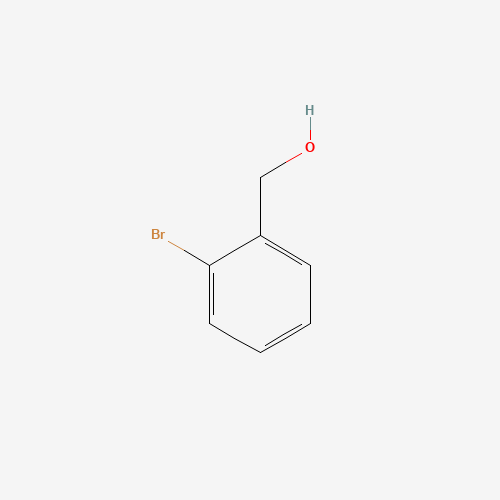
As a supplier of 3 - Bromobenzoic Acid, we are committed to providing high - quality products to support research and development in the field of electrochemical sensors. Our 3 - Bromobenzoic Acid is synthesized using advanced manufacturing processes, ensuring high purity and consistent quality. We also offer a range of other related products, such as 2 - Bromobenzyl Alcohol and Creatine HCl, which may also have potential applications in the sensor field.
We understand the importance of technical support in the development of electrochemical sensors. Our team of experts is available to provide guidance on the selection of the appropriate product, the optimization of experimental conditions, and the troubleshooting of any issues that may arise. Whether you are a researcher in academia or an engineer in industry, we are here to help you achieve your goals.
Conclusion
In conclusion, 3 - Bromobenzoic Acid shows great potential for use in electrochemical sensors. Its unique chemical and electrochemical properties make it a versatile material that can be used in various sensing applications. While there are challenges to overcome, such as selectivity and stability, ongoing research and development efforts are likely to lead to the development of more efficient and reliable sensors based on this compound.
If you are interested in exploring the use of 3 - Bromobenzoic Acid in your electrochemical sensor projects, we encourage you to contact us for more information and to discuss your specific requirements. Our team is ready to assist you in finding the best solutions for your needs.
References
- Bard, A. J., & Faulkner, L. R. (2001). Electrochemical Methods: Fundamentals and Applications. Wiley.
- Wang, J. (2006). Electroanalytical Techniques: Instrumentation, Theory, and Practice. Wiley - VCH.
- Handbook of Electrochemistry. (2008). Marcel Dekker.